

ELECTRICAL INSULATION
Choosing self-adhesive electrical insulation film
Self-adhesive insulation films cover and separate electrical areas on components. Choosing one depends on the specific film construction, the electrical requirement, and the conditions during processing and use.
01
Selection criteria
What electrical insulation does your component need?
Describe the area to be insulated, its contact with adjacent parts, and the stresses during use. Check the film backing, adhesive layer, overall thickness, and stated electrical properties of the individual product. An insulating backing does not automatically establish the properties of the adhesive layer; temperature, surface, and geometry also affect material selection.
02
INSULATION FILMS IN THE RANGE
Self-adhesive films for electrical applications
The protected listing shows items in the existing film and electrical product categories. Check each product's construction and stated technical properties to determine whether it is suitable for electrical insulation.
No products found
No products are currently listed in this category. Request a call back and we will help you find the right product.
Request a callback03
SELECTION AND PROCESSING
Assess film construction and operating conditions together
Polyimide and PET film backings are used for electrical insulation. Electrical and thermal properties, as well as adhesion, depend on the specific product construction and the test conditions. For an enquiry, tell us about the component and substrate, the electrical task, temperature profile, mechanical stress, and planned processing. Conductive or shielding films serve a different purpose; possible alternatives are listed under electrically conductive films and shielding films.
Krückemeyer GmbH converts suitable technical films into cut pieces and die-cut parts for components. We agree the shape, film construction, and handling with you for the application; the electrical function must be checked for the selected material. Describe the area to be insulated and the required supply format in the consultation form.
04
QUESTIONS ABOUT ELECTRICAL INSULATION
How do electrical insulation film and shielding film differ?
An electrical insulation film is selected to separate or cover electrical areas. A shielding film is intended to limit electromagnetic effects; conductive versions may also make an electrical connection. These tasks are not interchangeable. The construction and electrical properties of the specific product, together with its integration into the component, are decisive. First tell us whether you need to insulate an area, make an electrical connection, or provide shielding.
What information is needed to choose a self-adhesive insulation film?
The electrical task, the geometry of the area to be insulated, adjoining surfaces, and the conditions during processing and use are important. Compare the film backing, adhesive layer, thickness, and electrical properties stated by the manufacturer for the specific product. Temperature and mechanical stress also matter. A value for the backing alone is insufficient to assess whether the entire adhesive construction is suitable for your application. If requirements are unclear, a component description and drawing help with the technical assessment.
Is every self-adhesive polyimide film suitable for high temperatures?
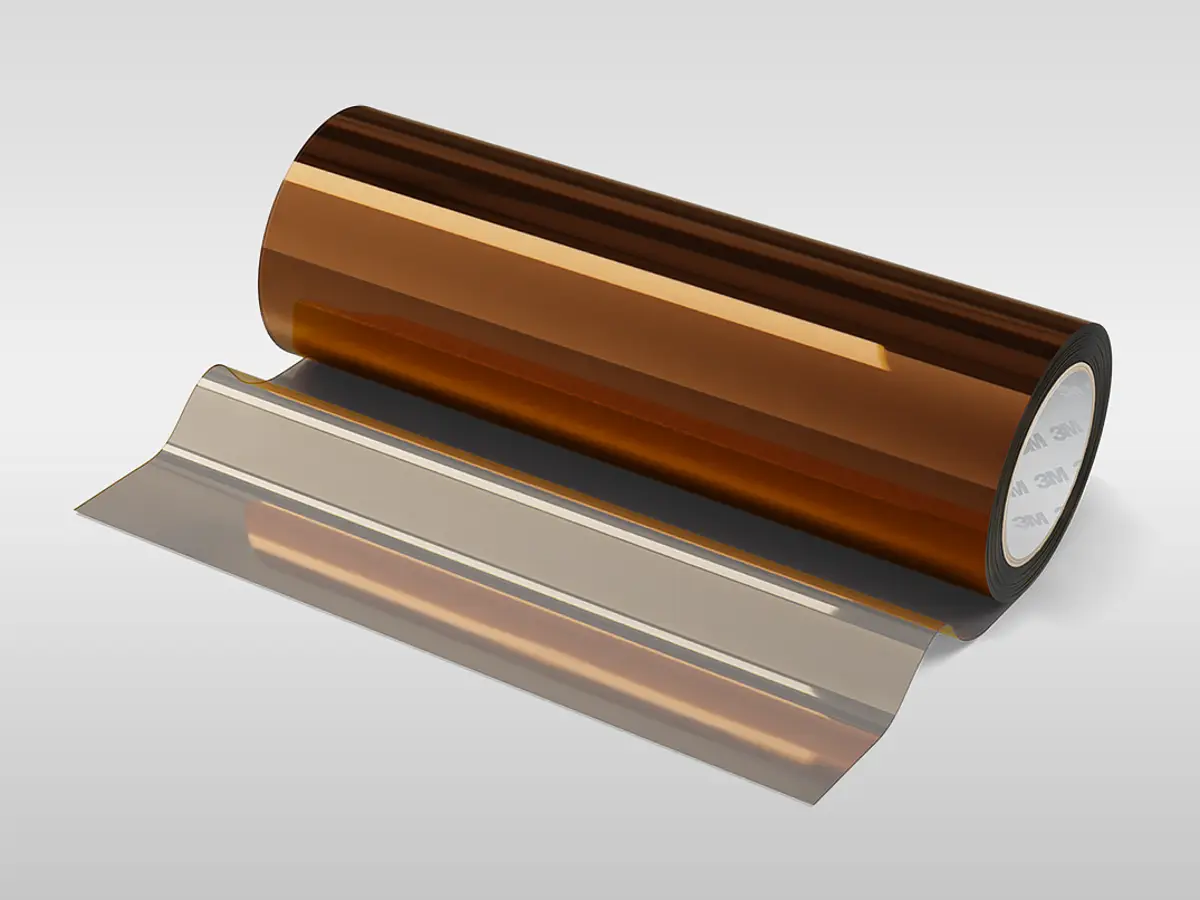
No. The permissible temperature depends on the specific film and adhesive construction, as well as the duration and conditions of exposure. For 3M Polyimide Film Electrical Tape 1205, the manufacturer specifies a polyimide backing with acrylic adhesive and use at elevated temperature. That does not establish general approval for other polyimide films or every component. Check the product information, temperature profile, substrate, and processing together before selecting a material.
How can electrical insulation films be converted for components?
Krückemeyer GmbH can cut suitable technical films to the intended component geometry or process them into die-cut parts. This requires information about the desired shape, the position of the adhesive layer, and handling during application. Delicate die-cut parts made from technical films can also be produced to insulate electronic components. Converting does not automatically change the material's electrical properties; material and geometry must be assessed together for the specific insulation task.
05
Request advice
Tell us about the component, substrate, electrical requirement, and temperature profile, as well as the required shape and supply format. We will assess a suitable material and possible converting with you.
Discuss your insulation task with us
Do you know where the film will be used, but still need to choose the material or shape? Tell us about the application; for specific items, you can use the enquiry list.

ADHESIVE TECHNOLOGY CONSULTATION
Thomas Klein
Contact for products
Thomas Klein will discuss the film construction, insulation task, and suitable supply format with you.