

ELECTRICALLY CONDUCTIVE SELF-ADHESIVE MATERIALS
Self-adhesive electrically conductive foil and related tapes
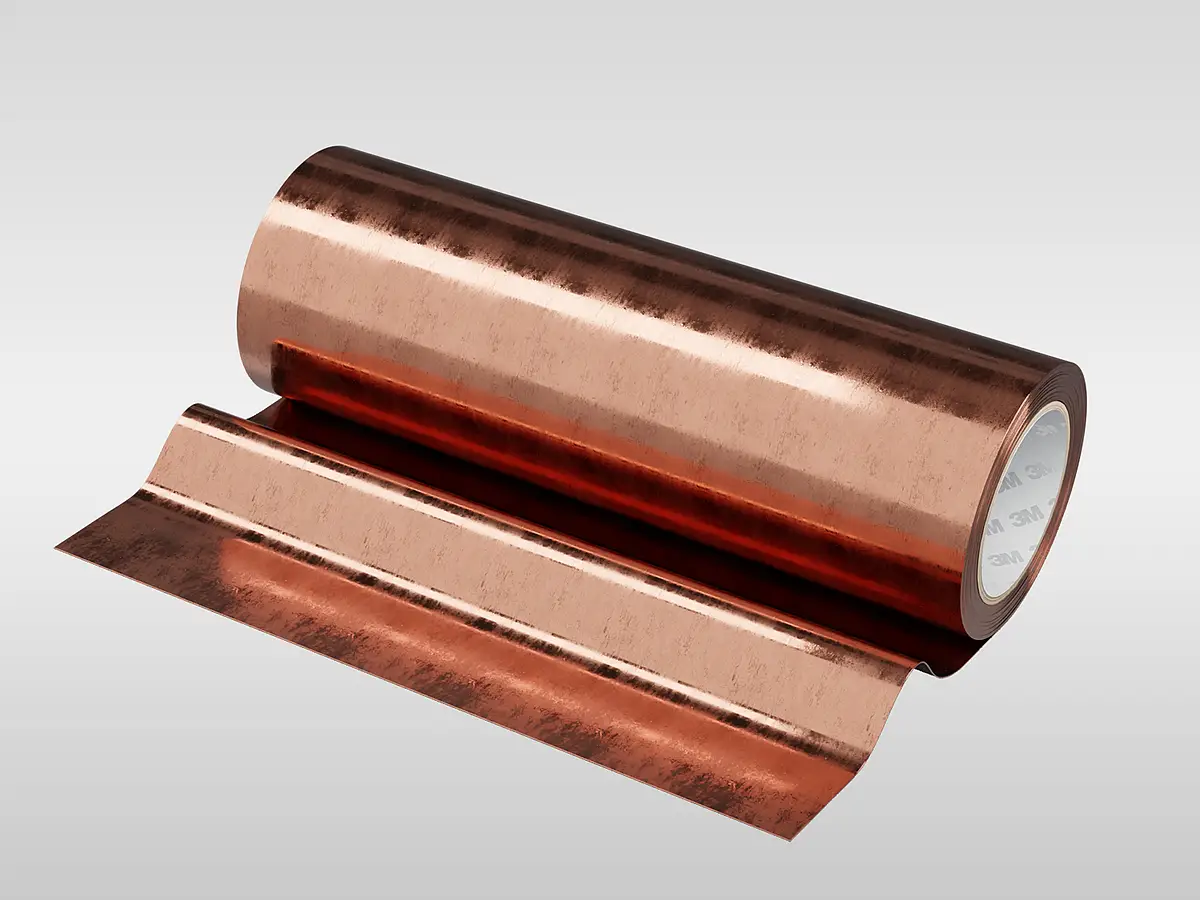
For shielding or grounding, the entire electrical contact path matters: carrier, adhesive and connection point. Alongside self-adhesive copper foil, the range includes conductive fabric and foam tapes; choose the construction to suit your connection.
01
Selection criteria
Check the carrier and contact path before selecting
First establish whether you need a shielding surface, a grounding connection or electrical contact between components. In tesa 60537, both the copper carrier and the acrylic adhesive are conductive. Other listed constructions use conductive fabric or foam, or contact designed for conduction through the Z-axis. A conductive carrier alone does not establish a current path through the adhesive; the product construction, contact area and connection all matter.
02
CONDUCTIVE SELF-ADHESIVE MATERIALS
Conductive foil and tape constructions in the range
The filterable listing shows products assigned the catalogue property “electrically conductive”. It includes self-adhesive copper foils as well as conductive fabric and foam tapes; check each product's data for suitability.
No products found
No products are currently listed in this category. Request a call back and we will help you find the right product.
Request a callback03
ELECTRICAL CONTACT
Which conductive construction suits the connection?
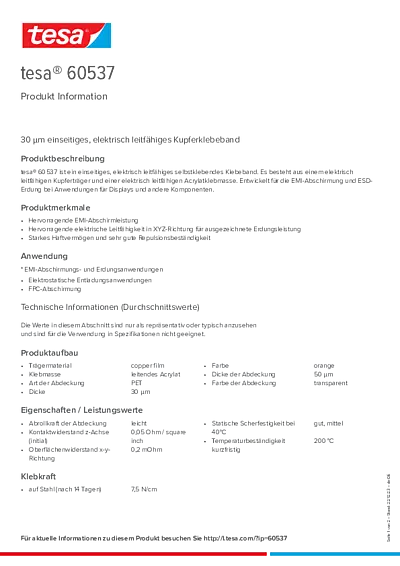
For surface shielding, a copper foil construction is one documented option: tesa 60537 specifies EMI shielding and ESD grounding as applications, with a conductive copper carrier and conductive acrylic adhesive. Where contact surfaces have tolerances, compressible conductive foam tapes may be an option depending on the product. Flexible circuits may call for a connection conductive through the Z-axis. These functions differ; check the direction of the current path, contact area, installation and environmental conditions for the specific product.
Krückemeyer GmbH can cut suitable self-adhesive foil tapes or convert them into die-cut parts. Shaping does not replace electrical testing: describe your component, connection and required delivery format in your enquiry.
04
COPPER FOIL DATA SHEET
05
QUESTIONS ABOUT CONDUCTIVE FOIL
When does a self-adhesive foil conduct through its adhesive layer?
Only when the specific product construction provides a conductive path through the adhesive. For tesa 60537, the manufacturer's data sheet specifies a conductive copper carrier and a conductive acrylic adhesive. A conductive metal carrier alone does not tell you whether the adhesive also conducts electricity. The contact surfaces and connection to the rest of the assembly also need checking; product data cannot replace a measurement on your finished connection.
How do conductive copper foil and conductive foam tape differ?
They differ in construction and therefore in the selection criteria. tesa 60537 combines a copper carrier with conductive acrylic adhesive for shielding and grounding applications. Conductive foam tapes use a compressible foam carrier and conductive adhesive; according to the product information, they can accommodate surface variations and tolerances. The contact geometry and compression required for your component must be checked against the specific product.
Is electrically conductive foil also an electrical insulating film?
No. A conductive connection and electrical insulation serve opposite electrical functions. The description “electrically conductive” says nothing about insulation performance, and adding a self-adhesive layer does not make copper foil an insulating film. If your component needs electrical insulation, select a suitable product construction and check its specifications for your particular application.
What details help when requesting cut or die-cut conductive foil?
Specify the component and contact surfaces, the electrical task, the required current path and the planned installation. For conversion, add the shape, dimensions and delivery format you need. Krückemeyer GmbH also converts self-adhesive foil tapes into die-cut parts; the chosen material and geometry must be suitable. Check the contact and electrical function in the finished application after shaping.
06
Request advice
Describe the electrical task, both contact surfaces, installation conditions and required shape. We will discuss the documented product construction and whether a cut length or die-cut part suits your application.
Enquire about conductive foil for your connection
Send us details of the component, contact task and required delivery format. Together we can review the material construction and conversion for your application.

ADHESIVE TECHNOLOGY ADVICE
Thomas Klein
Contact for products
Discuss the contact path, starting material and suitable delivery format with Thomas Klein.