

THERMAL CONDUCTIVITY · ADHESIVE TECHNOLOGY
Thermally conductive film for components and heat sinks
When heat must pass from a component to a heat sink, the right thermal interface matters. Thermally conductive adhesive films, pads and heat spreading tapes serve different purposes. Krückemeyer GmbH helps you select and convert materials for your component design.
01
Selection criteria
Define the heat path and contact surfaces first
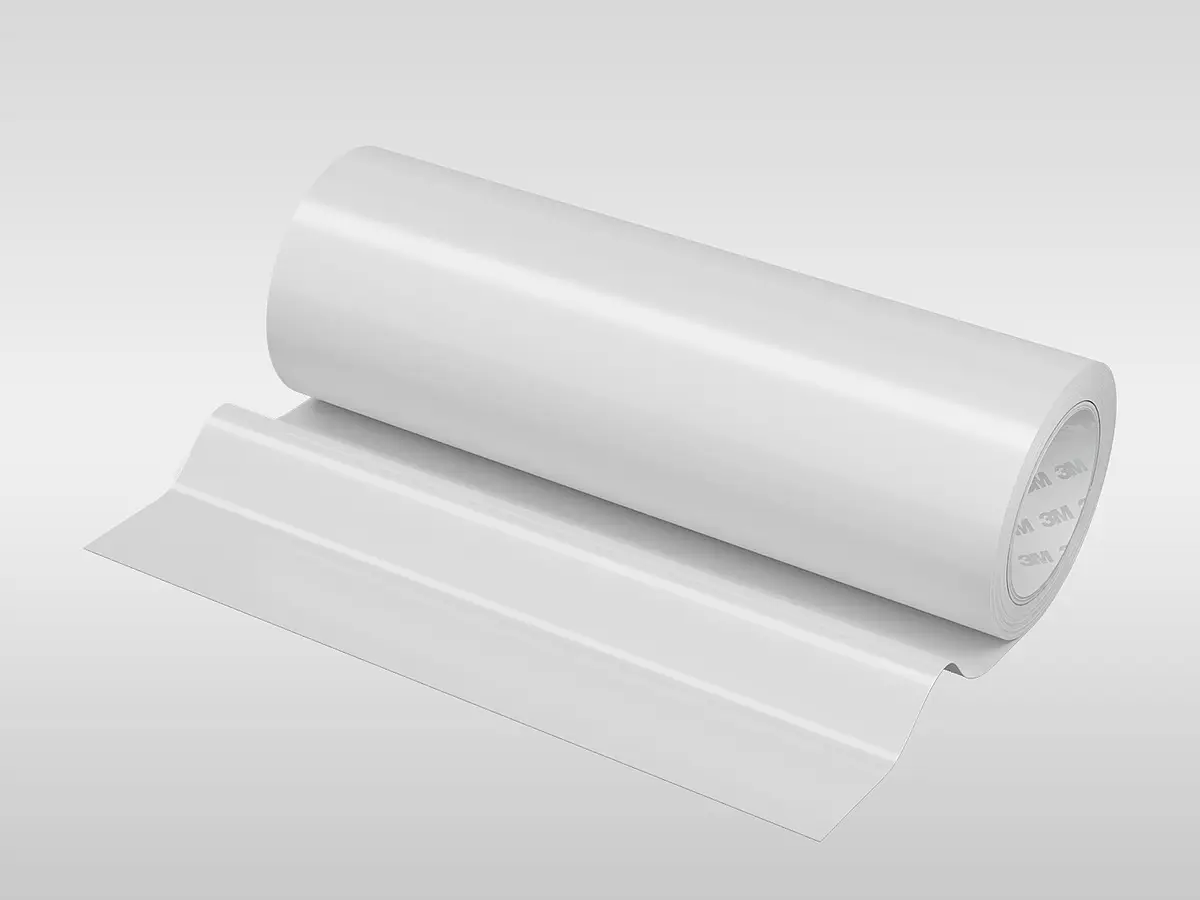
The first question is where the heat must travel: through the adhesive layer to a heat sink or along a surface to another cooling point. A thermally conductive adhesive film such as the 3M 8711 Series is designed for heat transfer across an interface; 3M 9876 spreads heat primarily in the plane. Assess layer thickness, the joined parts, surface contact and the direction of heat flow separately.
02
THERMALLY CONDUCTIVE MATERIALS
Thermally conductive products in the range
The product listing shows items classified as “thermally conductive”. Their construction and heat paths differ; the specifications for each product determine its suitability.
No products match this combination.
No products match all of the selected filter criteria.
03
CHOOSING THERMAL FILM
Choose thermally conductive film for your assembly
For a thermal interface between a heat source and a heat sink, contact on both surfaces matters alongside the documented material properties. The 3M 8711 Series is a pressure sensitive, filled acrylic adhesive film for this heat path; 3M 9876 is designed to spread heat along a surface. Selection therefore starts with installation direction and the actual component, rather than the term “thermally conductive” alone.
Tell us which parts are being joined, the available space, the temperature profile and the required shape. We will assess which product construction is suitable and whether cutting or die cutting supports your process. Electrical insulation, flammability and operating limits must be checked for the selected product and your application.
04
QUESTIONS ABOUT THERMAL FILM
What does thermally conductive film do between a component and a heat sink?
It can support the intended heat path at the contact interface. The 3M 8711 Series is a thermally conductive adhesive film designed for the interface between a heat generating component and a heat sink. Heat transfer in the finished assembly also depends on layer thickness, surface contact, application pressure and the overall cooling design. A product name alone establishes neither a particular component temperature nor sufficient cooling performance. To choose a material, describe both contact surfaces, the available space and the result you need.
How does an interface film differ from a heat spreading tape?
They are designed for different heat paths. The 3M 8711 Series serves as a thermal interface intended to transfer heat between a component and a cooling device. By contrast, 3M 9876 is designed to spread heat in the plane; its construction with a metal layer directs heat mainly along the surface. This does not make the products interchangeable. First determine whether heat must pass through a layer to a heat sink or spread across a surface. You can then assess construction, attachment and electrical requirements for the specific product.
Is every thermally conductive film electrically insulating?
No. Electrical insulation needs evidence for the selected product. The manufacturer describes dielectric performance for the 3M 8711 Series. For 3M 9876, electrical insulation is linked to its specified layered construction and polymer cover film. Those statements do not apply to every film in the range or to an entire assembly. If electrical separation is required, specify the voltage requirement, installation geometry and adjacent conductive parts. The suitable version and verification within the component design must then be determined separately.
What information does Krückemeyer need for converting?
Useful details include the material selected or under consideration, the dimensions of the contact area, cut-outs, the required layer thickness and your planned application process. Krückemeyer GmbH can cut suitable starting material and produce die cut parts. Whether the required geometry can preserve the chosen thermal material's intended function must be assessed against the product and application. Also describe where heat is generated and where it needs to go. This helps align the supplied form with your processing steps and installation conditions.
05
Request advice
Describe your component, cooling path and required shape. We will discuss which documented product construction and converting option may suit your application.
Enquire about film for your thermal interface
Send us your component requirements and intended heat path. We will assess the material, geometry and appropriate supplied form with you.

ADHESIVE TECHNOLOGY · THERMAL FILM
Thomas Klein
Contact for products
Thomas Klein will discuss the heat path, joined parts and required supplied form with you.